

 Products
 Skincare
 Vegan skincare
 Specific Skincare
 Advent calendar 2026
 Hair Care
 Makeup
 SALE
SALE
 Brands

Sunscreen may not be the most exciting step in your routine, but it is the step your skin will thank you for most in the long run. Still, there is a lot of confusion around SPF. What exactly is it? Which factor do you need? Which sunscreen suits your skin type? And how do you know whether a formula is suitable if you struggle with acne, eczema or sensitive skin?
Many people only use sunscreen on sunny summer days or avoid applying it because previous products felt sticky, caused breakouts or left a greasy layer behind. That is a shame, because the right SPF not only protects your skin against sunburn, but also helps prevent skin ageing, pigmentation spots and damage to the skin barrier.
In this guide, we explain exactly what SPF is, why daily protection is essential and how to choose a sunscreen that truly suits your skin.
What is SPF?
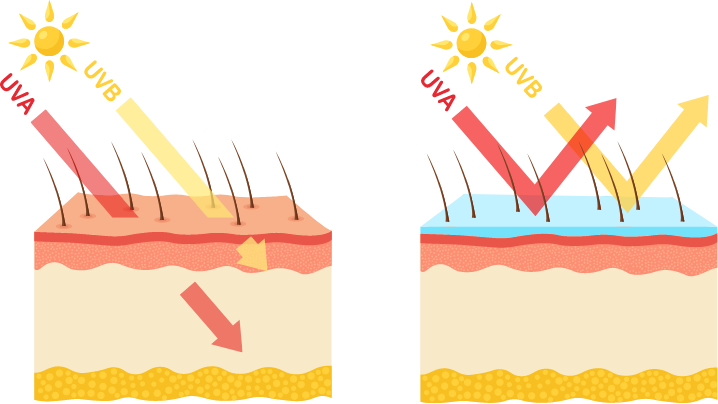
Think of SPF as your skin's daily protective layer. SPF stands for Sun Protection Factor. It indicates how well a product or sunscreen protects against UVB radiation, the radiation responsible for burning the skin.
The higher the SPF, the more protection the formula provides. SPF 30 blocks around 97 percent of UVB radiation, while SPF 50 blocks around 98 percent. That difference may seem small, but it can make a big difference for sensitive skin types or people prone to pigmentation.
Besides UVB, there is also UVA radiation. This penetrates deeper into the skin and is a major cause of premature skin ageing, pigmentation and collagen breakdown. That is why it is important not only to look at the SPF factor, but also at UVA protection. In many Korean sunscreen products, this is indicated with the PA system. PA++++ stands for very high protection against UVA radiation.
Why is SPF so important?
Without SPF, your skin simply misses its daily protective layer. A lot of skin damage develops gradually, without you noticing it straight away. UVA radiation is present all year round and even passes through clouds and windows. This means your skin can still be affected on cloudy days or when you spend most of your time indoors.
Forgetting SPF can lead to:
- premature skin ageing
- fine lines and loss of elasticity
- pigmentation spots
- redness
- a weakened skin barrier
- worsening of skin concerns such as acne and sensitivity
TIP: Do you use active ingredients such as retinol, vitamin C or exfoliating acids? Then daily SPF is even more important. These ingredients make your skin more sensitive to sunlight, so protection is essential to prevent irritation and damage. Do you mainly use these ingredients on your face? Then you can read everything about which sunscreen is best for your face!
Which SPF do you need?
Choosing the right SPF does not have to be complicated. It is not about the most expensive formula or the highest factor, but about a product that feels comfortable on your skin.
For daily use, dermatologists recommend at least SPF 30. Are you prone to pigmentation spots, do you burn quickly or do you use active ingredients such as retinol or exfoliating acids? Then SPF 50 is often the best choice.
The most important rule remains simple: the best SPF is the one you actually use every day.
Not sure which sunscreen suits your skin best? Use our handy SPF advisor.
When should you apply sunscreen?
Apply sunscreen every morning as the last step of your skincare routine.
The correct order:
- Cleanser
- Serum
- Moisturizer
- SPF
- Make-up
By applying SPF last, the protective layer stays intact as well as possible.
How long does SPF work?
The tricky thing about sun protection is that you do not immediately notice when it has worn off, so it is good to know the following: On average, sunscreen protects optimally for about two hours when exposed to daylight and sunlight.
After that, the protection slowly decreases. Especially when you touch your face, sweat or wear make-up, the protective layer can reduce faster. For daily protection, this means:
How do you know when to reapply SPF?
A frequently asked question! Our handy rule of thumb is to reapply SPF every two hours when you are outside or exposed to a lot of daylight. Do you notice that you have sweated, dried your face, exercised or touched your face a lot? Then your protective layer has probably already partly disappeared and reapplying is a smart idea.
TIP: Do you mostly work indoors and are you not in direct sunlight for long periods of time? Then applying sunscreen once in the morning is often enough. Are you sitting close to a window, going for a walk in the afternoon or travelling? Then you can give your skin extra protection by applying another layer.
What is the best sunscreen for your skin?
Which sunscreen suits your skin best depends entirely on your skin type and needs. Are you looking for a lightweight formula for daily use, a nourishing SPF without a white cast or specifically a mineral sunscreen for sensitive skin?
Because every skin reacts differently, there is no single perfect sunscreen for everyone. Are you looking for the safest sunscreen during pregnancy or are you looking for vegan sunscreen? And do you want it in a spray, cream or lotion? Luckily, you do not have to figure it out yourself.
Discover through our SPF test which sunscreen best matches your skin and routine.
Do you have sensitive skin, are you quickly prone to breakouts, acne or eczema? Then read the section below!
Sunscreen/SPF for skin concerns
Not every skin reacts the same way to sunscreen. Do you struggle with acne, breakouts, eczema or sensitivity? Then it is extra important to choose an SPF that not only protects, but also matches your skin's needs.
By choosing the right SPF, you not only prevent sun damage, but also support the recovery and balance of your skin.
Acne

Do you have acne-prone skin? Choose lightweight, non-comedogenic formulas that protect the skin without causing extra impurities. Read more in our blog about sunscreen for acne.
TIP: Do you use active ingredients against acne such as salicylic acid, benzoyl peroxide or retinol? Then daily SPF is extra important, because these ingredients make your skin more sensitive to UV radiation.
Breakouts

Do you regularly struggle with breakouts? Choose airy gel creams or lightweight fluid textures that absorb quickly and do not leave a greasy layer. Products with a heavy, occlusive texture can cause clogged pores more easily for some skin types.
Read more in our blog about sunscreen for breakouts.
Eczema

With eczema or sensitive skin, gentle protection is essential. A soft SPF without irritating ingredients often feels more comfortable on the skin barrier. Read more in our blog about sunscreen for eczema.
Do you generally have sensitive skin? Then use mineral sunscreen!
Mineral sunscreen is often considered comfortable because it is usually gentler on sensitive skin. Many people like mineral sunscreen for redness or sensitivity because it feels mild on the skin barrier. Read everything about mineral sunscreen in our blog on that topic.
Why do so many people choose Korean SPF?
Korean sunscreen has become extremely popular, and for good reason.
- ultra-light textures
- fast absorption
- no white cast
- comfortable finish
- advanced UV filters
PA system from Asia
Many Korean SPF products use the PA++++ system, which stands for very high protection against UVA radiation. While SPF indicates how well a product protects against UVB radiation, the PA system shows how much protection the sunscreen offers against UVA radiation. The more plus signs after PA, the higher the protection. PA++++ stands for the highest UVA protection and is therefore ideal if you want to protect your skin optimally every day.
All of this makes Korean sunscreen ideal for daily use, especially if you are looking for a formula that feels comfortable and works well with make-up.
Day cream with SPF
In practice, many people use too little day cream to get enough SPF protection. That is why a separate sunscreen often provides more reliable protection.
What many people love about Korean SPF/sunscreen is that it often feels like a hydrating day cream, giving you the best of both worlds: skincare and protection.
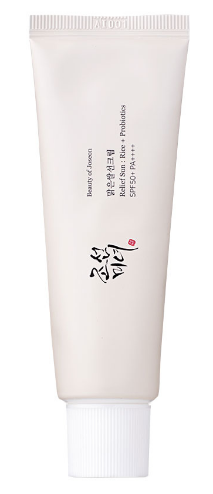
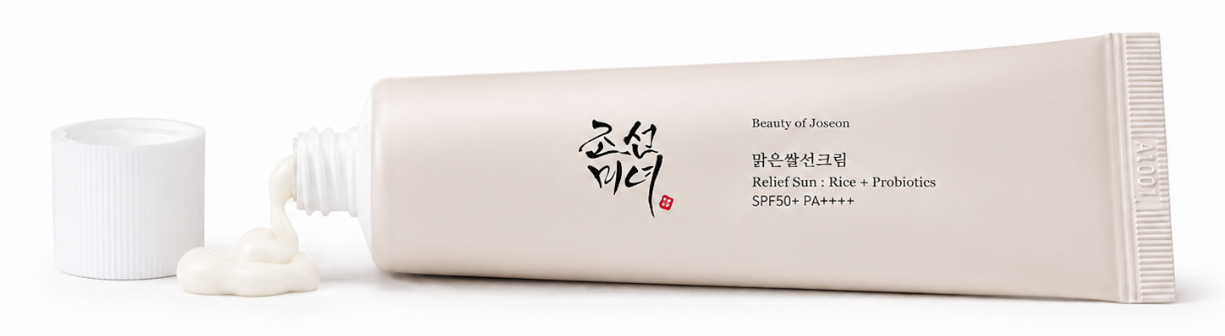
Beauty of Joseon Relief Sun
Rice + Probiotics SPF50+
This popular Korean sunscreen feels like a lightweight moisturizer and is therefore ideal for daily use. It also absorbs quickly, leaves no white cast and feels comfortable without becoming heavy or greasy.
View productFrequently asked questions about SPF
How long does sunscreen stay good?
Most sunscreen products are good for around 12 months after opening. You can often recognize this by the open jar symbol on the packaging, for example 12M. Do you notice that the texture, scent or colour has changed? Then it is smart to replace the product. Damaged or expired UV filters may protect less effectively.
TIP: Extend its lifespan by storing your sunscreen in a cool, dry place and avoiding prolonged exposure to direct sunlight or high temperatures.
Does sunscreen prevent you from tanning?
No, sunscreen does not completely prevent your skin from getting colour. What sunscreen does do is protect your skin against harmful UV radiation. Your skin can still gradually tan, but in a safer way and with less risk of burning, pigmentation spots and premature skin ageing.
So do not see sunscreen as a block to a summer tan, but as protection that helps keep your skin healthy.
Is sunscreen without alcohol better?
That depends on your skin type. Alcohol is used in some sunscreen formulas to create a lightweight, fast-absorbing texture. For many skin types, that is not a problem. Do you have sensitive, dry or reactive skin? Then an alcohol-free formula may feel more comfortable and reduce the chance of irritation or dehydration. Not sure? Then read our blog about sunscreen without alcohol.
Which sunscreen is not sticky?
Nothing is more annoying than sunscreen that sticks to everything! This stickiness often depends on the formula. Modern Korean sunscreens in particular are known for lightweight textures that absorb quickly and feel comfortable on the skin. Gel creams and fluid textures often feel much nicer than traditional, richer sunscreen creams.
Are you specifically looking for sunscreen that is not sticky? Then read more in our blog this sunscreen is not sticky.
Why does some sunscreen leave a white cast?
A bit technical, but a white cast is usually caused by certain mineral UV filters, such as zinc oxide or titanium dioxide. Although these filters protect very effectively, they can remain visible as a light layer on some skin tones.
Modern Korean sunscreen formulas have often improved this a lot. Many of these products absorb transparently and do not leave a visible layer behind. Looking for an SPF without a white cast? Select that in our SPF advisor and see which sunscreens do not leave a white cast! Or keep reading below!
Discover your ideal SPF
Curious which SPF suits your skin best? Discover our full range of sunscreen products and take our handy SPF test. This way, you can easily find a formula that perfectly matches your skin type, routine and wishes.
With love for skincare,
Little Wonderland.