

 Products
 Skincare
 Vegan skincare
 Specific Skincare
 Advent calendar 2026
 Hair Care
 Makeup
 SALE
SALE
 Brands

From sunburn and a sticky feeling to dehydrated skin: discover how to protect, restore and keep your skin healthy this summer.
Sun, heat, air conditioning, salt water and chlorine can throw your skin off balance. Your skin may feel tight, become oilier or suddenly respond differently to the routine you normally rely on.
In this Summer SOS Guide, you will discover how to prevent and solve the most common summer skin concerns, so your skin stays healthy and radiant all summer long.
Summer SOS Checklist
Run through your routine before heading out into the sun.
Summer SOS: my skin is sunburned
You come home after a wonderful day at the beach. Your skin feels warm and tight, and the moment you look in the mirror, you can already see it: you stayed in the sun just a little too long.
Fortunately, there is plenty you can do to care for your skin after sun exposure. Even more importantly, you can take steps to help prevent future sun damage.
1. How do you recognise sunburned skin?
Not sure whether your skin is sunburned?
Look out for these signs:
- your skin feels warm;
- redness;
- a burning sensation;
- tight-feeling skin;
- pain when touched;
- dry skin;
- itching or a tingling sensation;
- peeling after a few days.
The sooner you respond, the better you can support your skin's natural recovery process.
2. What happens to your skin when it burns?
Many people think sunburn only begins once the skin turns red. In reality, UV damage starts much earlier.
When UV radiation reaches your skin, your body immediately tries to protect itself. Pigment cells produce extra melanin, damaged skin cells are repaired and a natural inflammatory response begins. This can make your skin feel warm, red or sensitive.
Your skin barrier also comes under pressure. As a result, your skin loses moisture more quickly, which can make it feel tight and more sensitive to skincare products.
In the long term, free radicals - unstable particles in the body - can also contribute to premature skin ageing and pigmentation spots.
Want to learn more about SPF and UVA/UVB? Read our ultimate SPF guide.
3. What helps sunburned skin?
Sunburned: what should you do?
1. Move into the shade immediately
Do not stay in the sun once you notice your skin becoming red or starting to burn. Every additional minute of UV exposure increases the chance of further damage.
2. Cool your skin
A lukewarm shower or cool compress helps draw heat away from your skin.
Avoid ice-cold water or placing ice cubes directly on your skin, as this may cause additional irritation.
3. Hydrate and soothe
Your skin loses a lot of moisture after sun exposure.
Choose products with soothing ingredients such as:
- aloe vera;
- panthenol;
- glycerin;
- hyaluronic acid;
- centella asiatica.
These ingredients support the skin barrier and help your skin feel more comfortable while it recovers.
4. Keep your routine simple
When your skin is irritated, less is more.
Temporarily stop using products with active ingredients such as retinol, AHAs or BHAs.
Instead, use:
- a gentle cleanser;
- a hydrating serum;
- a nourishing moisturizer;
- a good SPF.
This gives your skin the rest it needs.
5. Let your skin recover naturally
A few days after sunburn, your skin may begin to peel. This is part of its natural recovery process.
As tempting as it may be, never pull off loose skin. Doing so can damage the new skin forming underneath.
6. Give your skin extra protection
Sunburned skin is especially vulnerable.
Stay out of the sun as much as possible until your skin has fully recovered.
Do you still need to go outside?
- wear protective clothing;
- seek shade regularly;
- use SPF 30 or SPF 50;
- reapply every two hours.
4. Our skincare specialist recommends for sunburned skin
Our after-sun care favourites
5. How do you prevent sunburn?
Prevention is always better than recovery
Fortunately, a lot of sun damage can be prevented.
Make SPF the final step of your morning routine.
Choose a sunscreen with at least SPF 30. Spending a long time outdoors? Reapply every two hours, especially after swimming or heavy sweating.
Do not forget your:
- ears;
- neck;
- lips;
- décolletage;
- hands;
- scalp.
These areas are often missed, even though a lot of sun damage occurs there.
Summer SOS: my skin feels oily and sticky
You step outside and, before you have even reached your destination, your skin already feels sticky. Your T-zone is shiny, your make-up does not last as well and your sunscreen seems to sit on top of your skin.
Shiny skin is perfectly normal on hot summer days. With lightweight products and a few smart adjustments, your skin can stay fresh, comfortable and well protected.
1. How do you recognise oily and sticky skin?
You step outside and, before you have even reached your destination, your skin already feels sticky. Your make-up does not last as well, your T-zone is shiny and your sunscreen seems to sit on top of your skin. Sound familiar?
Shiny or sticky skin is perfectly normal on hot summer days. However, that does not mean you should skip skincare or SPF. With the right products and a few smart adjustments, your skin can stay fresh and well protected.
2. Why does your skin feel oily and sticky in summer?
As temperatures rise, your body works harder to cool down. You sweat more and your sebaceous glands often produce additional sebum. This is a natural response that helps protect your skin from dehydration.
When sweat, sebum and sunscreen mix, your skin can become shiny or develop a sticky layer. Many people assume their SPF is the culprit, when it is often the combination of heat, perspiration and an unsuitable formula.
3. What helps oily and sticky skin?
Does oily skin really need SPF?
Absolutely. Perhaps even more than you think.
A common mistake is using less sunscreen - or skipping it altogether - because oily skin already looks shiny. Daily sun protection is still the most important step for:
- helping prevent pigmentation spots;
- limiting premature skin ageing;
- keeping the skin healthy;
- reducing UV damage.
Skin that is prone to blemishes or pigmentation can especially benefit from a good broad-spectrum SPF.
Choose a sunscreen that suits your skin
Not every sunscreen feels the same. Do you have combination or oily skin? Choose a lightweight formula that absorbs quickly and feels comfortable.
Look for terms such as:
- lightweight texture;
- gel cream or fluid;
- non-comedogenic;
- matte finish;
- oil-free.
This helps prevent your skin from feeling unnecessarily heavy or greasy.
4. Our skincare specialist recommends for oily skin
Our favourites for oily or combination skin
Looking for a sunscreen that suits your skin type? Browse our Korean sunscreen collection and discover which formula works best for your skin.
5. How do you prevent oily and sticky skin in summer?
1. Start with gentle cleansing
Cleanse your skin every morning to remove excess sebum, overnight sweat and leftover skincare. A gentle cleanser is enough; harsh cleansing can actually throw your skin off balance.
2. Choose lightweight hydration
Oily skin still needs hydration. When your skin does not contain enough moisture, it may actually start producing more sebum.
Choose a lightweight gel cream or hydrating serum instead of a heavy, rich cream.
3. Choose an SPF that suits your skin
Not every sunscreen suits oily skin. A lightweight, mattifying sunscreen can make a big difference to how comfortable your skin feels.
4. Blot away excess sebum
Does your skin start looking shiny during the day? Use blotting paper or a clean tissue to gently remove excess sebum.
This keeps your skin feeling fresh without disturbing the protective layer of your SPF.
5. Remember to reapply
Spending a long time outdoors, sweating heavily or drying your face? Reapply sunscreen every two hours.
This may be the most important step in your summer routine.
Common oily-skin mistakes
When the skin feels oily, many people try to solve it by:
- using harsh cleansers;
- choosing alcohol-heavy toners;
- skipping moisturizer altogether;
- stopping SPF use.
These habits can throw your skin further off balance. Dehydrated skin often produces extra sebum, which only makes the problem worse.
TIP: A little shine is completely normal on hot days. Instead of aiming for perfectly matte skin, focus on maintaining a healthy skin barrier. With the right products, your skin can feel comfortable and stay well protected.
Read all about sunscreen that does not feel sticky.
Summer SOS: what does your skin need during a heatwave?
During a heatwave, your skin may suddenly feel warmer, more sensitive or unsettled. You sweat more, your skin becomes shiny and products that normally work well can suddenly feel too heavy.
Adapting your routine to the heat helps keep your skin cool, hydrated and comfortable. The main priorities are protection, hydration, barrier support and cooling.
1. How do you recognise the effects of heat on your skin?
A heatwave places a lot of stress on both your body and your skin. Heat causes your blood vessels to widen so your body can release warmth, you sweat more and your skin often produces more sebum.
Shiny skin does not automatically mean your skin is sufficiently hydrated. In fact, your skin can lose a surprising amount of moisture on hot days.
That is why skincare during a heatwave revolves around four important pillars:
- protection;
- hydration;
- barrier support;
- cooling.
2. What happens to your skin on hot days?
How does your skin change on hot days?
More sebum
Heat often makes your sebaceous glands produce more sebum. This can make your skin become shiny more quickly or lead to blemishes sooner.
Resist the urge to scrub more often or use harsh products. Gentle cleansing is usually enough.
Less moisture
Heat and perspiration cause moisture to evaporate from your skin more quickly. As a result, your skin can feel tight even when it looks oily.
Hydrating ingredients such as:
- hyaluronic acid;
- glycerin;
- panthenol;
help maintain your skin's moisture level.
A sensitive skin barrier
Alongside heat, your skin also has to cope with UV radiation, air conditioning and changes in temperature. This can temporarily make your skin barrier more sensitive.
Do active ingredients such as retinol or exfoliating acids start to sting more easily? Give your skin a break and temporarily switch to a simple routine.
3. What helps your skin during a heatwave?
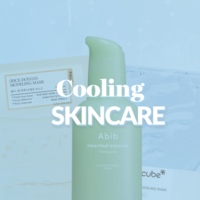
Cooling skincare: extra refreshment for hot days
Sometimes your skin simply needs a refreshing moment.
A useful Summer SOS tip is to store certain skincare products in the refrigerator. A hydrating serum, face mist or eye product can feel wonderfully cooling when your skin feels hot or tired.
The cooling sensation can temporarily reduce the appearance of redness and immediately make your skin feel more comfortable.
Read everything about cooling skincare.
4. Our skincare specialist recommends cooling skincare
Face mists for on the go
A face mist is ideal when you are travelling or need a quick refresh.
Our favourites:
Perfect for your beach bag, handbag or desk on hot working days.
Want to discover more cooling skincare? Explore our hydrating toners, face mists and lightweight moisturizers for a fresh summer routine.
5. How do you protect your skin during a heatwave?
Your heatwave checklist
Keep your routine lightweight
Hot days usually do not call for heavy creams. Choose airy textures that absorb quickly and provide sufficient hydration.
Drink enough water
Hydration does not only come from skincare. Drinking enough water also supports your body's fluid balance.
Seek shade regularly
UV radiation is strongest between approximately 12:00 and 15:00. Staying in the shade as much as possible during these hours reduces the stress on your skin.
SPF remains the most important step
UV radiation still reaches your skin on cloudy days.
Make it a habit to apply a broad-spectrum SPF every morning and reapply throughout the day when you spend a lot of time outdoors.
TIP: Above all, listen to your skin. Does it feel hot, dry or sensitive? Adjust your routine instead of sticking to what works during the rest of the year. In summer, less is often more: a gentle cleanser, hydrating serum, lightweight moisturizer and good SPF form the perfect base for most skin types.
Summer SOS: my skin feels tight and dehydrated
Your skin feels tight, lacks its natural glow and still feels dry even after applying a cream. Sound familiar? Your skin is probably lacking moisture rather than nourishment.
Heat, UV radiation, air conditioning, salt water and chlorine can cause your skin to lose moisture without you noticing. With the right ingredients and a skin-friendly routine, you can help it feel comfortable, supple and hydrated again.
1. How do you recognise dehydrated skin?
Your skin feels tight, lacks its natural glow and still feels dry even after applying a cream. Sound familiar? This summer, your skin may be lacking moisture rather than nourishment.
Hot weather, UV radiation, air conditioning, salt water and chlorine can all make your skin lose moisture without you noticing. This can happen to every skin type, including oily skin.
The good news? With the right ingredients and a skin-friendly routine, you can help your skin feel comfortable, supple and hydrated again.
2. Why does your skin become dehydrated in summer?
Your skin naturally contains moisture-binding substances such as hyaluronic acid, amino acids and other components of the Natural Moisturizing Factor (NMF). Together with the skin barrier, they help keep moisture inside the skin.
When the skin barrier is disrupted, more moisture evaporates than normal. This process is called Transepidermal Water Loss (TEWL).
This can happen more quickly during summer due to:
- prolonged sun exposure;
- hot temperatures;
- dry air from air conditioning;
- swimming in salt water or chlorine;
- showering with water that is too hot;
- an overly harsh skincare routine.
The result? Skin that feels tight, looks less radiant and reacts more sensitively to products.
3. What helps dehydrated skin?
1. Attract moisture
Use ingredients that attract and retain moisture in the upper layers of the skin.
Look for:
- hyaluronic acid;
- glycerin;
- panthenol;
- aloe vera;
- beta-glucan.
These ingredients immediately make your skin feel more comfortable and help keep it supple.
2. Lock in moisture
Hydration works best when you also help retain the moisture.
Ingredients that support the skin barrier include:
- ceramides;
- cholesterol;
- fatty acids;
- squalane;
- plant oils.
Together, they help strengthen your skin's natural protective layer.
4. Our skincare specialist recommends for dehydrated skin
Our favourites for dehydrated skin
Discover our collection of hydrating serums and moisturizers for skin that could use some extra moisture.
5. How do you prevent dehydrated skin in summer?
When your skin is dehydrated, this is not the time to introduce lots of new active ingredients.
Instead, choose:
- a gentle cleanser;
- a hydrating serum;
- a moisturizer that supports the skin barrier;
- a good SPF every day.
This gives your skin the rest it needs to recover.
Frequently asked questions about summer skincare
Can I get sunburned when it is cloudy?
Yes. A large amount of UV radiation still reaches your skin on cloudy days. That is why daily SPF remains important, whatever the weather.
How often should I reapply sunscreen?
Are you outdoors? It is recommended to reapply sunscreen every two hours. Swimming or sweating heavily? Reapply more often.
Can I use retinol during summer?
Yes, but be careful. Retinol makes your skin more sensitive to UV radiation. Use it in the evening and always wear a broad-spectrum SPF during the day. Many people choose to build up more intensive retinol routines in autumn or winter.
Why does my skin feel oily and dry at the same time?
Shiny skin does not automatically contain enough moisture. Heat can make your skin produce more sebum while it simultaneously loses moisture. This can make your skin feel both oily and dehydrated.
What is the difference between SPF and PA?
SPF indicates how well a sunscreen protects against UVB radiation, which is responsible for sunburn.
The PA rating shows how strong its protection is against UVA radiation, which plays a major role in premature skin ageing.
Is self-tan the same as sun protection?
No. A self-tanner gives your skin a bronzed appearance but does not protect it against UV radiation. Always use sunscreen alongside self-tan.
Discover your Summer SOS routine
Looking for products that perfectly suit your skin this summer? Explore our collections and easily build a routine for your skin type and needs.
Enjoy summer with confidence
Summer asks a little more of your skin than the rest of the year. By adapting your routine to heat, sun and moisture loss, you support your skin barrier and help prevent concerns such as redness, dehydration and a sticky feeling.
Whether you are going on holiday, visiting a festival or simply enjoying a sunny day at home, the right skincare helps your skin stay comfortable, healthy and radiant.
And remember: the best summer routine does not need to be complicated. A gentle cleanser, sufficient hydration and a good broad-spectrum SPF form the basis of skin that is ready for every sunny day.
Summer SOS Essentials at a glance
| Summer SOS | Essentials |
|---|---|
| ☀ Sunburned or sensitive? |
|
| ◎ Oily or sticky? |
|
| ☁ Hot weather? |
|
| ○ Dehydrated skin? |
|